
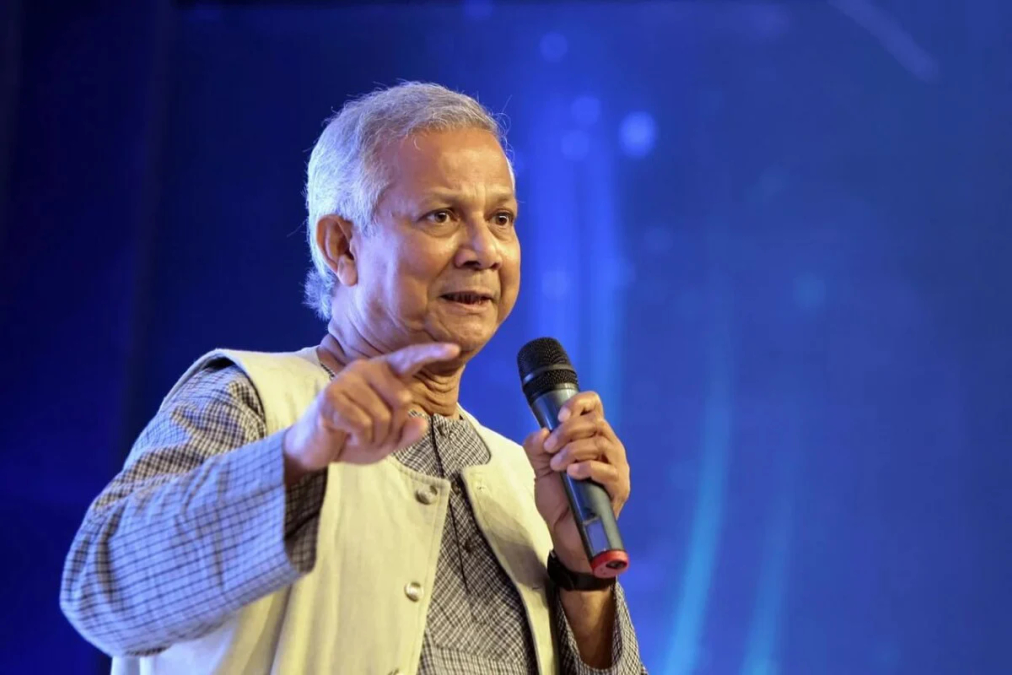

DIVYA DELHI : Outgoing Bangladesh government chief Muhammad Yunus stirred diplomatic attention on Monday after referring to India’s northeastern “Seven Sisters” states alongside Nepal and Bhutan in his farewell address. Yunus outlined a sub-regional economic vision that included Nepal, Bhutan and India’s northeastern states, without directly naming India. “This region along with Nepal, Bhutan and the Seven Sisters has great economic potential,” he said, proposing deeper cooperation through connectivity, trade agreements, economic zones and maritime access via Bangladesh. By grouping the Indian states with sovereign countries, Yunus appeared to blur established political distinctions, a move that comes amid strained India-Bangladesh ties. Yunus, whose 18-month interim administration took charge after the fall of the Sheikh Hasina-led government in August 2024, defended his foreign policy record, saying it restored “sovereignty, national interest and dignity” and ensured Bangladesh was “no longer submissive.” His tenure saw expanded engagement with China, Japan, the United States and Europe, alongside progress on Chinese-backed projects including the Teesta River initiative. However, relations with India deteriorated, with New Delhi raising concerns over minority safety and law-and-order issues. Power will now pass to the Bangladesh Nationalist Party (BNP), led by Tarique Rahman, which won 209 of 297 seats in the February 12 parliamentary elections and is set to form the next government. In his closing remarks, Yunus called for a “just, humane and democratic Bangladesh,” saying he leaves office with optimism.