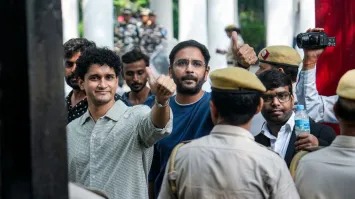

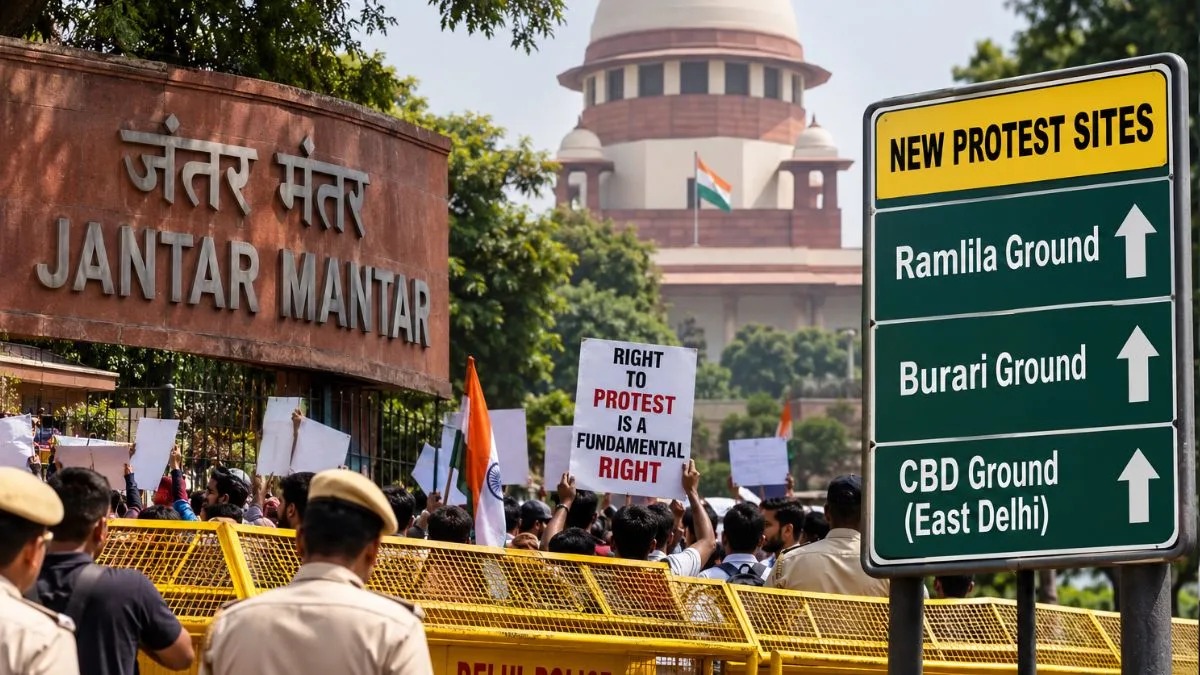

DIVYA DELHI : The Supreme Court of India’s 2018 ruling on protests at Jantar Mantar in New Delhi remains an important reference point in the debate over the right to peaceful assembly and restrictions on public demonstrations. The case arose after concerns were raised about noise pollution and inconvenience caused by protests at Jantar Mantar and the Boat Club area near India Gate. In October 2017, the National Green Tribunal (NGT) had directed authorities to stop protests at Jantar Mantar and shift demonstrations to an alternative location. The Supreme Court subsequently addressed the issue in July 2018, setting aside the NGT’s blanket prohibition and emphasising the need to balance citizens’ fundamental right to protest peacefully with the rights of residents and the public. The court directed authorities to frame guidelines regulating demonstrations, taking into account public order, noise pollution and other civic concerns.The ruling did not establish an unrestricted right to hold protests at any location or without conditions. Instead, it highlighted the need for reasonable regulation rather than a complete prohibition. Jantar Mantar has long served as a prominent venue for demonstrations on social, economic and political issues, making the judgment significant for discussions about peaceful protest and freedom of expression in India.